The practical layer between an AI idea and a working system.
Avyon Intelligence is a small team helping growing organisations turn promising ideas into useful, understandable systems — one clear decision at a time.
From signal to system
Make the next decision visible.
A clearer path from problem to working system.
Clarify
Name the useful problem before choosing the technology.
A shared problem statement, the people it affects, and the first question worth answering.
You do not need a full plan to start.
Bring the question, workflow, or friction that keeps coming up. We help turn it into a useful next step.
- 01
Make sense of the opportunity
Turn an open-ended AI ambition into a practical first problem, path, and decision.
Start with strategy - 02
Build a useful system
Shape the data, product, model, or workflow around the way your team already works.
Explore engineering - 03
Make it safe to run
Put the right boundaries, handoffs, and review points around a system before it becomes hard to change.
See governance
Not sure which of these you need? The AI Readiness Assessment scores your data, infrastructure, governance and operating readiness in about five minutes, and names the layer holding the rest back. Nothing is sent anywhere. Score your readiness
Inside the portal
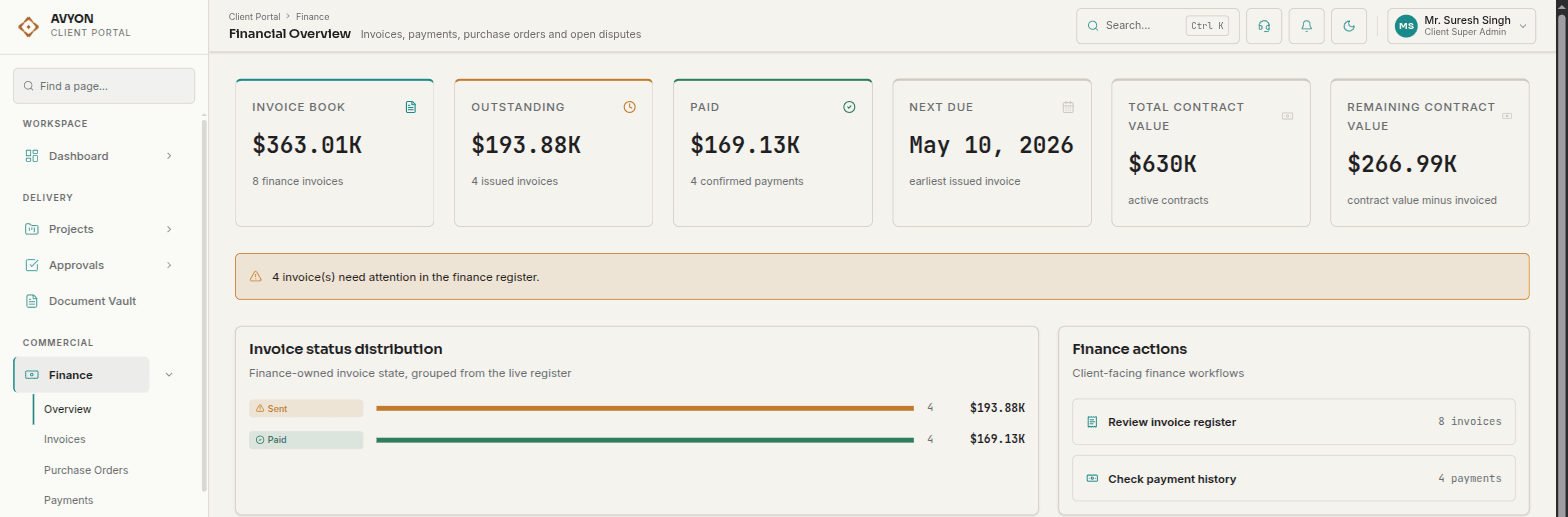
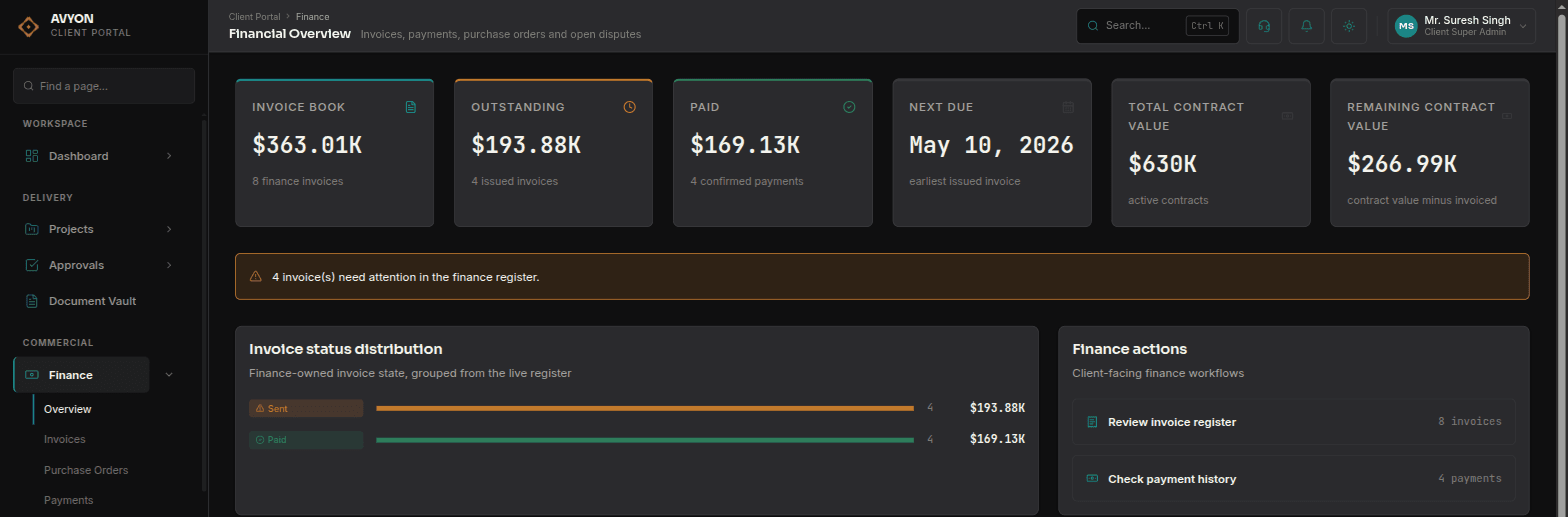
You always know where the money and the work stand.
No separate status call needed. This is the real client portal — live spend and invoice status for every active engagement.
- Invoice book
- Outstanding
- Paid
- Next due
- Spend by month


The pieces are useful on their own. They become stronger together.

Shape the work
Start with the question, data, and operating context that make an AI system worth building.

Build the system
Bring models, retrieval, agents, products, and workflows together in a way people can use.
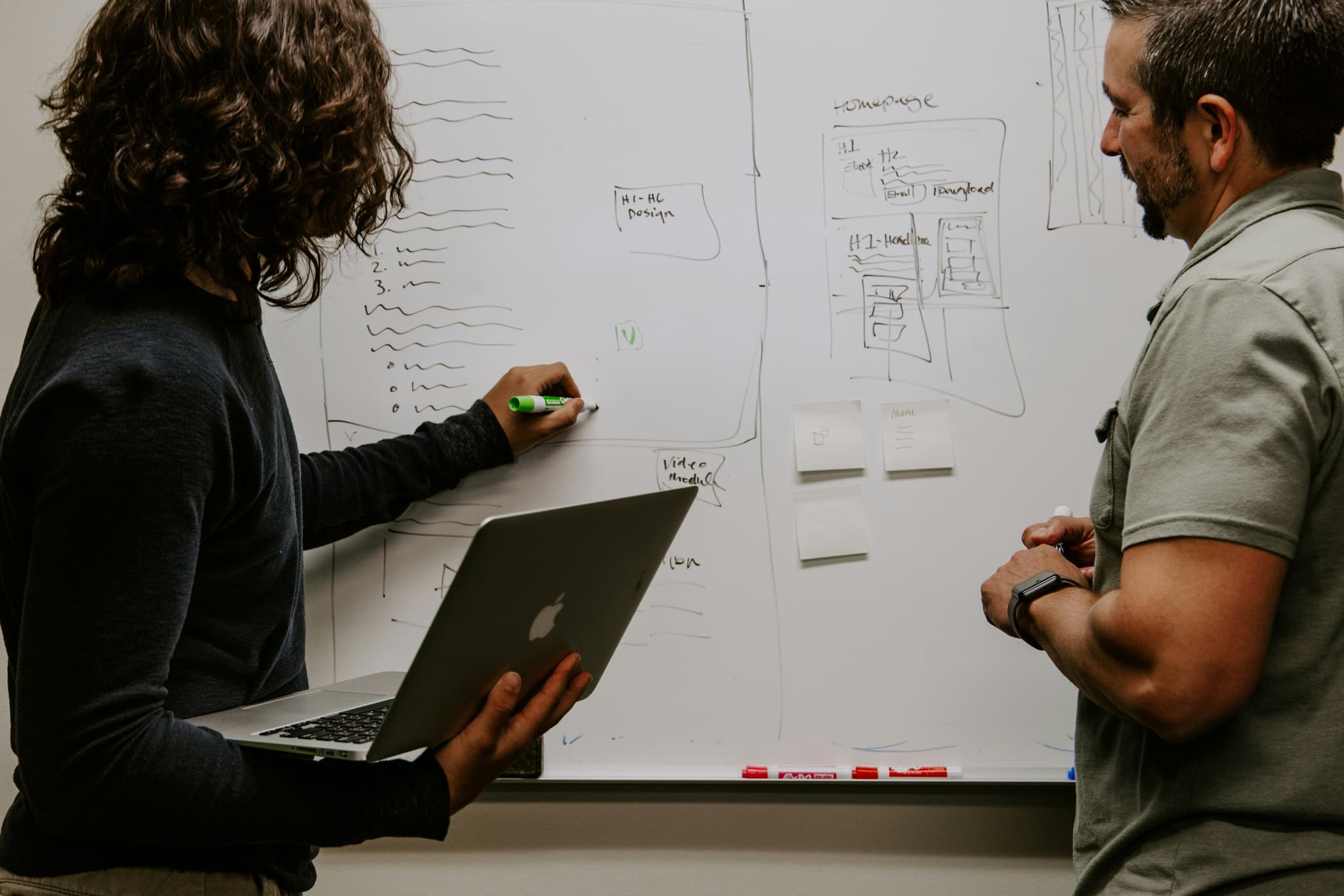
Run with confidence
Give the system the boundaries, automation, and governance needed for its real environment.
Start small. Learn quickly. Keep the next decision clear.

- 01
Clarify
We narrow the opportunity until the first useful decision is visible.
Problem frame - 02
Shape
We agree the smallest system that can teach us something real.
First-system plan - 03
Deliver
We make the workflow, data, and technical choices concrete together.
Working increment - 04
Learn
We use evidence from the work to decide what should happen next.
Next-step summary
What people ask before the first conversation
You do not publish any case studies. Why should we take you seriously?
We have none yet, and we would rather say so than invent one. Three used to sit on this site — made-up figures, quotes nobody had given — and we took them down. A case study goes up when a real client has approved the numbers and agreed to be named. Until then, three things are open to inspection instead. The AI Demo Lab shows each capability and the governance behind it. The AI Readiness Assessment scores your own estate in about five minutes, shows its workings, and sends nothing anywhere. And the client portal on this page is not a mock-up: it is the system clients actually use to see what they are spending.
What happens on a discovery call?
It takes about forty minutes, and you talk to the person who would do the work — nobody hands you on to a stranger afterwards. We spend it naming the real problem before anyone mentions technology. You leave with a written problem statement and a suggested first step, or a plain no if that is the honest answer. It is yours to keep either way, whether or not you hire us.
What if the honest answer is that we do not need AI?
Then that is the answer, and it is a legitimate outcome of the first conversation. A good deal of what gets sold as an AI problem is a data problem, a process problem, or a reporting problem wearing a different hat. Naming that is more useful to you than a model that automates something nobody needed automated, and it is cheaper to find out at the start.
How do you stop an AI system from doing something we cannot explain?
Through a governance process that runs before production rather than after an audit finding. Every model passes nine gates in sequence: use-case approval, data approval, design review, bias assessment, explainability, error-team testing, human-in-the-loop design, production approval, and monitoring activation. The gates decide what the system is allowed to decide on its own and where a human stays in the path. The process is written down and enforced in our own codebase, not assembled for a client engagement.
Do we have to replace what we already run?
No. The work is built around the systems and the workflow you already have — that is the intended shape of it, not a concession. Most of the value in a first engagement comes from making an existing process visible and reliable, which is difficult to do while also replacing the thing underneath it.
Who does the work?
A small team. We would rather say that plainly than imply a bench we do not have — and it is the reason the first engagement is deliberately scoped small enough to finish and learn from.
Have a real workflow in mind? Let’s make it concrete.
Share the problem as it exists today. We’ll help you see whether there is a useful first system inside it.